
Friday, May 25, 2012


Bamboo magazine rack

Saturday, February 18, 2012

Tuesday, January 31, 2012
Cup Holders


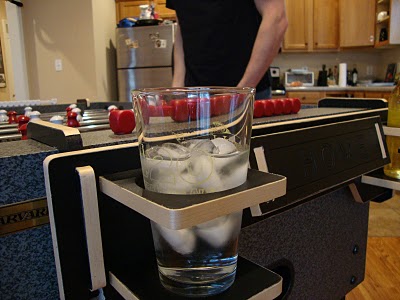
Tuesday, January 24, 2012
Technology challenges the master violinmaker

Most people consider Italian violinmaker Antonio Stradivari the greatest violinmaker of all time. He’s getting some competition from technology. Today, on Engineering Works!.
A team of modern violinmakers and a doctor is using technology the 18th-century luthier never dreamed of to measure and duplicate – almost exactly – violins built by the master.
The doctor, a radiologist, or specialist in medical imaging, also is an amateur violinist. He came up the idea of using computed tomography, or CT, imaging to get exact three-D images of one of the 500 or so Stradivari violins that have survived to today. The CT scan produced more than 1,000 images of the 300-year-old violin.
Then they converted the CT images to computer files that programmed a computer numerically controlled, or CNC, router. The
CNC router is a machine tool that can shape new violin parts to almost exactly the dimensions of the originals. The scans also show the density of the wood in individual parts. This allows modern violin makers to use different woods to match the density of the original. The newly made parts seem to match the originals.
One of the best things about this approach is that the original instruments aren’t disassembled or damaged. The researchers say the imaging is so detailed that it could also be used to identify individual instruments and track repairs to them over the years since Stradivari made them.
Sunday, January 22, 2012
CNC Router Cut CD Ninja Stars

Behold, the CNC cut CD ninja star! At one point I believed I had invented the CD ninja star, but a quick search of Google proved me very wrong. As far as I can tell though, this is the first one that is cut with a CNC router, so maybe that’s something.
The picture to the right is, unfortunately, a result of placement, not the actual star sticking in the dartboard after a throw. Not that this wasn’t attempted. The shuriken in the upper left was a result of one of the points breaking off.
Not the sturdiest weapon in the world. After cutting off another point to make it symmetric, it’s flight is still impressive if incredibly random. I tested it out in the house (not recommended) where it arced around a wall nearly poking my wife in the eye.
Cutting was done with an engraving bit from ZTW at a depth of cut of .010″ per pass. I didn’t offset anything, but just drew it and cut as an engraving. The CD was fixtured the same way as the last HDD clock that I did, but one difference was that the zero of the X and Y axes were on the edges (shown by the green and red lines in the CAMBam picture after the break), not the center. This allowed me to line everything up based on an edge instead of estimating the center of it.
It seems that things cut much better if started from the side with a picture. Things seemed to delaminate from the other side, but this could also be a result of using an industrially-written CD instead of writeable media.
Mold cutting using cnc router
George Leone, Student Project Facilitator at Cal Poly San Luis Obispo, CA, recently sent us pictures of a project that students from the Human Powered Vehicle Club designed for the ASME Human Powered Vehicle Challenge. The human powered vehicles have been known to reach speeds of approximately 55 mph.

Precision Board Plus PBLT-6 mold being routed
After testing the sheet-metal prototype, a mold was cut from Precision Board Plus PBLT-6 using their “hot-rodded” ShopBot CNC router. They then vacuum-bagged the molds for the bodies using a room-temp cure system. The molds were coated with Duratec for an ultra-smooth surface. Once finished, the Carbon/Kevlar bodies were fitted over a composite or Chrome-Moly frame.
The bikes are 100% built by students unless the technology is WAY beyond the capabilities or ingenuity at Cal Poly. This is also an all-volunteer club, and students do not earn credits for participation.
George has been working with composites for over thirty years. He enjoys working with Precision Board Plus because “it allows students to take their vision and turn it into reality quickly and easily, whether they are using Surform files and sandpaper or a CNC router. It’s low-dust, green chemistry composition coupled with its favorable carbon balance and renewable resource content appeal to the stewardship concerns of our 21st century engineers in training.”
Subscribe to:
Posts (Atom)